
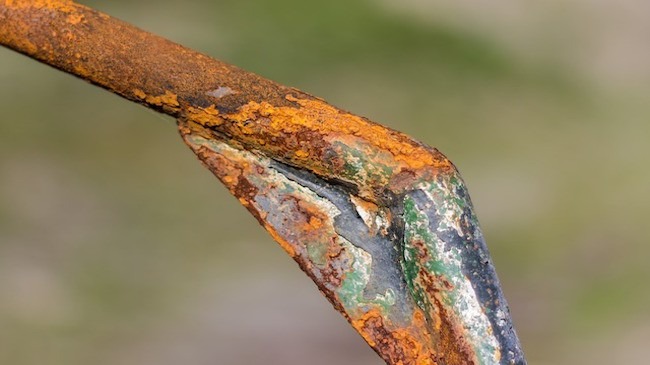
Oxidation means: a reaction with oxygen in which free radicals are formed.
Free radicals
A free radical is an atom or molecule with a yet unused bonding possibility. You can think of this unused bonding possibility as hooks that like to grab onto something. They damage other molecules by pulling off electrons with hooks. This particle then also becomes a free radical again and a chain reaction ensues.
Free radicals are therefore rightly radicals or terrorists of the body: They undermine the biochemistry of the human body. Free radicals are normally produced during normal metabolism and resemble a built-in natural ageing tool. But we can also ingest free radicals through diet (oxidising unsaturated fat).
These free radicals can be rendered harmless by antioxidants. You get these antioxidants through food (e.g. vitamins C and E) and are also produced by the body itself (glutathione, melatonin).
Oxidation increasing factors are stress, inflammations, extreme exercise, high calorie intake and illness.
So reduce stress as much as possible, don't stress the body too much, sleep well and eat fresh and varied food.

Which antioxidants are best to eat and/or supplement?
"Fact about oxidised fat"
Unsaturated fats can react with oxygen from the air. This often happens when heating in the wrong fat or long contact of highly unsaturated oil to air. Oxidised fat behaves like free radicals. So antioxidants are needed to neutralise them.
The more unsaturated the fat, the greater the risk.
- Omega-3 already oxidises at room temperature when exposed to air. Hence, omega-3 belongs in a capsule, flaxseed too, and thus NOT crushed in a bag or as oil in a bottle.
- Omega-6 is slightly more stable and reacts slightly less quickly at room temperature. When heated, it does oxidise!
- Omega-9 is even more stable and you can even heat it reasonably without significant oxidation.
- Saturated fat does not oxidise and is most suitable for frying.
 English
  Dutch
Dutch
One Response